miércoles, julio 20, 2016

Curation in Social Leadership [part 1] | Julian Stodd's Learning Blog

Curation in Social Leadership [part 1] | Julian Stodd's Learning Blog:


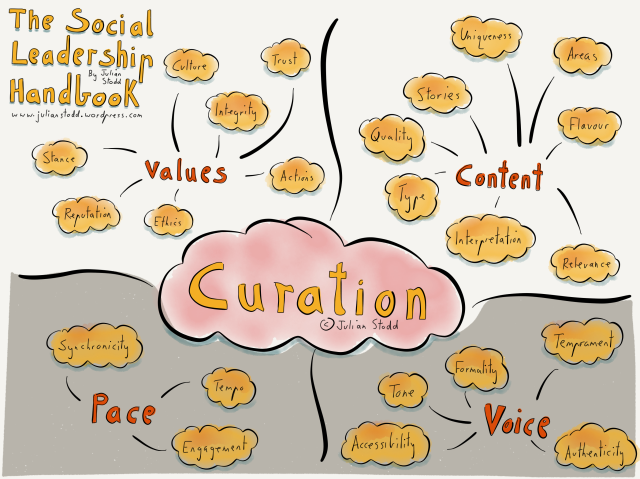
Curation in Social Leadership

 "Social Leadership describes a type of authority that applies in communities, outside of formal hierarchy, and based upon our reputation, earned over time. It’s not an alternative to formal leadership, it’s complimentary to it: but it’s reach extends where formal power cannot go. It’s important because, in the Social Age, so much of our sense making and performance is rooted around co-created knowledge, around socially moderated learning, around storytelling and sharing. Today, as i prepare to launch the 2nd Edition of the ‘Social Leadership Handbook’, i want to expand on the notion of ‘curation’, which is the foundation of Social Leadership."


'via Blog this'

Five Ways to Help Students Succeed in the Online Classroom

Five Ways to Help Students Succeed in the Online Classroom:

online student at laptop


"More and more students are flocking to the online classroom for the convenience of earning college credits from the comfort of their home. However, many of these students are ill-prepared for the dedication and discipline needed to be successful in the online environment. Oftentimes students have misconceptions concerning the rigor of online courses, and they often underestimate the amount of time and discipline necessary to complete assignments, discussions, quizzes, and projects. Therefore, it is important for the instructor to set the tone of the course to help students succeed. So how do you help your students succeed in the online classroom?"


'via Blog this'

20 microlearning formats worth your consideration (part I) | PT Learning blog

20 microlearning formats worth your consideration (part I) | PT Learning blog:

Microlearning examples


"As I’ve discussed before, microlearning is an approach to training that delivers content to learners in small, targeted bursts. The learners choose their path and pace through the content.
When a learning organization begins to incorporate a microlearning strategy into its overall training curriculum, it’s safe to start with five-minute Storyline modules or brief videos. They’re just the beginning, though; you can choose from many more micro options:"


'via Blog this'

martes, junio 07, 2016

The Do’s and Don’ts of Writing for eLearning

The Do’s and Don’ts of Writing for eLearning:


dos-donts-elearning-final.jpg


"Have you ever read something where it seems like the material was written by someone who simply wanted to show off how smart they are? When this happens, do you find yourself thinking how brilliant the author is? No, it’s far more likely that you get annoyed with the person who wrote the piece and possibly frustrated with yourself. This is NOT the way to write your courses.

As an eLearning designer, there will be times when you know the material far better than the average student, but the last thing you want to do is create a course that goes over students’ heads. You need to strive to be clear without talking down to your audience and engaging without being letting the entertainment value overshadow the information."


'via Blog this'

miércoles, mayo 11, 2016

7 Micro-eLearning Techniques to Improve Performance - eLearning Industry


7 Micro-eLearning Techniques to Improve Performance


7 Micro-eLearning Techniques to Improve Performance - eLearning Industry:


"In this article, I will offer you an in-depth look at how you can integrate Micro-eLearning techniques into your eLearning course, in order to improve performance and provide your students or employees with the most beneficial eLearning course design."


'via Blog this'

Luvai F Motiwalla - A Vision for Microlearning

17 Awesome Resources on Micro-Learning - eLearning Industry


Awesome Resources on Micro-Learning


17 Awesome Resources on Micro-Learning - eLearning Industry:


"We, at Learnnovators, have been fascinated about micro learning or bite-sized learning. We have been doodling about the possibilities this learning technique offers while developing cost effective and powerful mobile performance support solutions. Today, while contemplating on the design for a mobile-based bite-sized learning solution (made up of quick, short instructional videos accompanied by Quick Reference Guides) for one of our clients, we set out on a journey to explore and learn more about this wonderful approach. Read on..."


'via Blog this'

domingo, abril 17, 2016

tricks.png

The 4 Best Tricks to Help Learners Remember Your Content

Posted by Karla Gutierrez on Tue, Apr 12, 2016 @ 12:00 PM


It’s happened to all of us: we’re presented with information and yet we forget it. Why does it happen?
One of the most common reasons is because our attention is elsewhere. It’s similar to what happens when a student is attending a lecture, yet is simultaneously spending time on their smartphone. While they may be physically present in the lecture, their divided attention leads to a failure to retain most, if not all, of the information taught. 
Another reason we don’t encode information is because we don’t see it as relevant. If you’re training employees and they don’t see content directly related to their job or their career growth, they’re likely to lose focus and fail to embed the information in their memory.


3-10.jpg


Now What? Five Things You Should Do After Launching Your eLearning Course


Okay, so your eLearning course is all wrapped up and ready to go – but what do you do now? Do you feel a strange sense of inertia? Like you should be doing something? You’re right. There are five things that it’s essential to do after you’ve completed your course design. Here they are:

viernes, abril 01, 2016

5 importantes diferencias entre la generación Z y los millennials


Resultado de imagen para generacion z


5 importantes diferencias entre la generación Z y los millennials:


"A pesar de que los millennials continúan con popularidad dentro del mercado, es necesario destacar que llega un nuevo segmento que se caracteriza por tener una alta capacidad de comunicación y por lo tanto de obtener información de manera inmediata, la cual recibe el nombre de generación Z.


La generación Z está conformada por personas que nacieron a partir de 1995, mismos que ahora poseen entre 15 y 17 años de edad. Hay que destacar que el crecimiento e importancia de este segmento sobresale cuando Adobe indica que en cinco años, estos representarán el 40 por ciento de las personas con capacidad adquisitiva."


'via Blog this'

Generación Z:  ¿Quiénes son y cómo capacitarlos?


Resultado de imagen para generación z


Generación Z:  ¿Quiénes son y cómo capacitarlos?:


"En la blogosfera se habla con insistencia de la generación Y o los conocidos “Millennials” desde hace un tiempo - y hemos hablado sobre el diseño de eLearning adecuado para ellos. Pero los tiempos están cambiando y es el momento de empezar a pensar en la próxima generación.

Nacidos después de mediados de los años 90 y creciendo en la primera década del 2000, la nueva fuerza de trabajo denominada 'Generación Z' va a representar el 20 por ciento para el año 2020, según estimaciones. Con esto en mente, estaríamos ante una situación única de cuatro generaciones distintas trabajando juntas, incluyendo los Baby Boomers y las generaciones X e Y.

"


'via Blog this'

viernes, marzo 25, 2016

Tecnologías para el Aprendizaje y el Conocimiento: 5 retos tecnológicos que enfrentan los aprendices adultos

Tecnologías para el Aprendizaje y el Conocimiento: 5 retos tecnológicos que enfrentan los aprendices adultos: "Los aprendices adultos adquieren su conocimiento muy diferente de los niños. Ellos están mucho más orientados a resultados, a metas y a la práctica y además son muy autodirigidos. En lo que refiere a tecnología, no podemos simplemente asumir que los adultos entienden o saben qué hacer con ella. En este artículo he agrupado lo que creo son los cinco principales retos enfrentados por los aprendices adultos.

Qué retos tecnológicos enfrentan los aprendices adultos
Estando en la mitad de mis 40s crecí en una época en la que la tecnología no era tan prolífica como lo es hoy, especialmente en el aula. Mi introducción a las computadoras fue a través de una caja gigante que tenía una pantalla negra y verde con BASIC. Luego de colocar algunas líneas de código quedé atónito al ver mi nombre moviéndose en la pantalla – esto fue simplemente impresionante y cuando dejé el aula, todo eso fue olvidado rápidamente – era el momento de la ciencia casera y allí no había computadoras."


'via Blog this'

viernes, enero 29, 2016

Tecnologías para el Aprendizaje y el Conocimiento: 17 consejos para motiva a los aprendices adultos

Tecnologías para el Aprendizaje y el Conocimiento: 17 consejos para motiva a los aprendices adultos:


Hector Terán


"Traducción e interpretación libre del articulo publicado originalmente en: http://elearningindustry.com/17-tips-to-motivate-adult-learners

La introducción de la tecnología para el aprendizaje y el entorno de trabajo cambiante, han incrementado recientemente la importancia del aprendizaje en el adulto. Sin embargo, hay un problema en cuanto a la motivación del aprendiz adulto y es que, para lograrlo hay que tener algunas cosas en consideración.
Cómo motivar los aprendices adultos

Los adultos, a diferencia de los niños y jóvenes, en muchos casos, tienen muchas cosas en sus mentes y tu curso, es probablemente la última de ellas. Aunado a esto, tu aprendiz no ve la recompensa de tus esfuerzos tan pronto como se esperaría y darles dulces, no funciona tan bien como con los niños. Además, los hábitos académicos que alguna vez tuvieron, probablemente los olvidaron. Por último, pero no finalmente, muchos aprendices usualmente son forzados a tomar un curso para mejorar sus habilidades, mantener su trabajo, obtener un trabajo, o continuar avanzando en sus planes de carrera. Todo esto hace difícil motivar a los aprendices y hacerlos participantes activos.

Aquí hay 17 consejos para motivar a los aprendices adultos que puedes probar."


'via Blog this'

domingo, diciembre 20, 2015

How To Create & Collaborate In A Sharing Economy -


we-commC


How To Create & Collaborate In A Sharing Economy -:


 "2015 has been a year ripe with change and watershed transformation, but as we move into 2016 many new trends lurk on the horizon. In a new report, Billee Howard talks about the top 10 emerging trends to look out for in the year ahead that will impact entrepreneurialism, innovation and the consumer landscape overall. One of those trends that parallels those happening in education is the idea of a sharing economy.

The sharing economy will continue to explode but will move away from the notion of “altruism” to profiting for the many and not the few. We will see a continued push towards sharing business ecosystems that embrace the we instead of the me and provide value and benefit to the communities they operate in as a whole.

This idea of businesses benefiting themselves, the consumers they serve, and local people seeking freelance employment, will become more evident and an obvious sign of the permanence of our new Uber X economy."


'via Blog this'

13 Ways Education Could Change In The Next 13 Years


activity-learning-fi


13 Ways Education Could Change In The Next 13 Years:


"Ed note: 2 Pieces for Context–30 Incredible Ways Technology Will Change Education by 2028 and Curriculum is More Important Than Learning Technology

We recently speculated on the what education might look like in the year 2028 (see the link above), when today’s kindergartners have finished K-12 and beginning their work in the world (or college). The focus of that piece was technology, and how it might impact the way students learn in the coming decades.

This piece is similar, but a bit more focused on the pros and the cons of learning trends, and the ultimate impact they might have on education, and society at large. Note that all of these pieces are necessarily speculative, presented to hopefully promote conversation, illuminate possibility, and help us to stop and think where this all might be headed."


'via Blog this'

7 Steps To Become an Instructional Designer - eLearning Industry


7 Steps To Become an Instructional Designer


7 Steps To Become an Instructional Designer - eLearning Industry:


 "Choosing to become an Instructional Designer can lead to a truly rewarding career path. Not only do you get the chance to earn a living by doing what you are passionate about, but you also have the opportunity to give others the gift of knowledge. Keep in mind that an effectively designed eLearning course or training module can make a world of difference in someone's personal or professional life. With that being said, knowing which steps to take in order to become an Instructional Designer may be crucial for your career."


'via Blog this'

viernes, junio 05, 2015

Las cosas que nadie le dice sobre ser un diseñador instruccional

Las cosas que nadie le dice sobre ser un diseñador instruccional:


esp_B1_6-Things


"Entonces, ¿cree que ha encontrado su vocación?

¿Y ha decidido que usted quiere ser un diseñador instruccional?

¡Eso es genial! No podría haber elegido un trabajo más emocionante. Pero antes de dar el paso, demos un vistazo a  la realidad. Quítese los lentes color de rosa y conozca realmente qué es el trabajo de un diseñador de eLearning."


'via Blog this'

lunes, mayo 25, 2015

Diez beneficios del lenguaje digital en la educación | Educación y Cultura : Revista AZ

Diez beneficios del lenguaje digital en la educación | Educación y Cultura : Revista AZ:


noticias182bis

"Cuando hablamos de lenguaje digital, no solo hablamos de lenguaje hipertextual, sino también de los lenguajes interactivo, audiovisual, sonoro, social o de programación, que facilitan el aprendizaje al alumno, lo motivan al estudio, le permiten adquirir las competencias clave de esta época y fomentan el desarrollo de las inteligencias múltiples.

Frente al lenguaje analógico, más limitado, el lenguaje digital reúne y combina un amplio abanico de lenguajes que permiten a los alumnos aprender de distintas maneras, y a los profesores, personalizar la enseñanza en función de las características de cada alumno."


'via Blog this'

sábado, noviembre 08, 2014

¿Un futuro sin profesores? | César García


¿Un futuro sin profesores? | César García:


"Uno lee las conclusiones de la encuesta realizada a 645 expertos en educación de los cinco continentes por la Cumbre Mundial para la Innovación en la Educación (WISE, por sus siglas en inglés) -una iniciativa de la Fundación Qatar sobre innovación y colaboración en el ámbito de la educación- y tiene sensaciones contradictorias.

Por una parte, el informe habla de cambios muy profundos hacia 2030 en un terreno, la educación, en el que las cosas han cambiado muy poco en los últimos 300 años. Pero, al mismo tiempo, bastantes de los cambios de los que habla ya llevan aquí algún tiempo y tienen poco de futuristas (asumiendo que 2030 sea un horizonte temporal suficiente).

Entre otras muchas cosas, el informe habla de que las escuelas se convertirán en entornos interactivos en el que el profesor perderá un peso que será ganado por los alumnos, que trabajarán en redes colaborativas en las que el profesor, en cierto modo, será un mero facilitador."


'via Blog this'